Exosome Therapy for Knee Osteoarthritis
Knee Arthritis Treatment
Osteoarthritis (OA) is a common, progressive, multifactorial joint disease and a leading cause of chronic pain and disability. The knee is the most severely affected joint, with nearly 4/5 of all OA cases occurring in the knee globally.
Currently, there are no treatments that can slow cartilage degeneration or restore joint function in knee osteoarthritis. Existing therapies primarily use multimodal approaches to manage pain and joint stiffness.
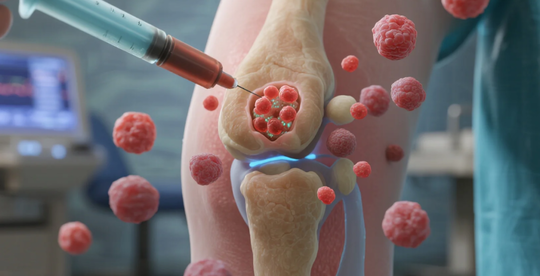
In a mouse study, researchers established a collagenase-induced osteoarthritis (CIOA) model and conducted preclinical intra-articular administration of sEV. μCT imaging revealed improved bone mineral density (BMD) and BS/BV ratios in the knee joints of mice treated with sEV. Safranin O/Fast green staining further confirmed the protective effect of sEV on cartilage, evidenced by lower histological scores.
Furthermore, analysis of mouse popliteal lymph nodes revealed that sEVs suppress inflammation, modulate CD4+ T cell populations, reduce pro-inflammatory cells, and increase regulatory T cells (CD25+FOXP3+ Tregs). Biodistribution studies showed that DiR-labeled sEVs remain stably localized within the knee joint space for an extended period after injection.
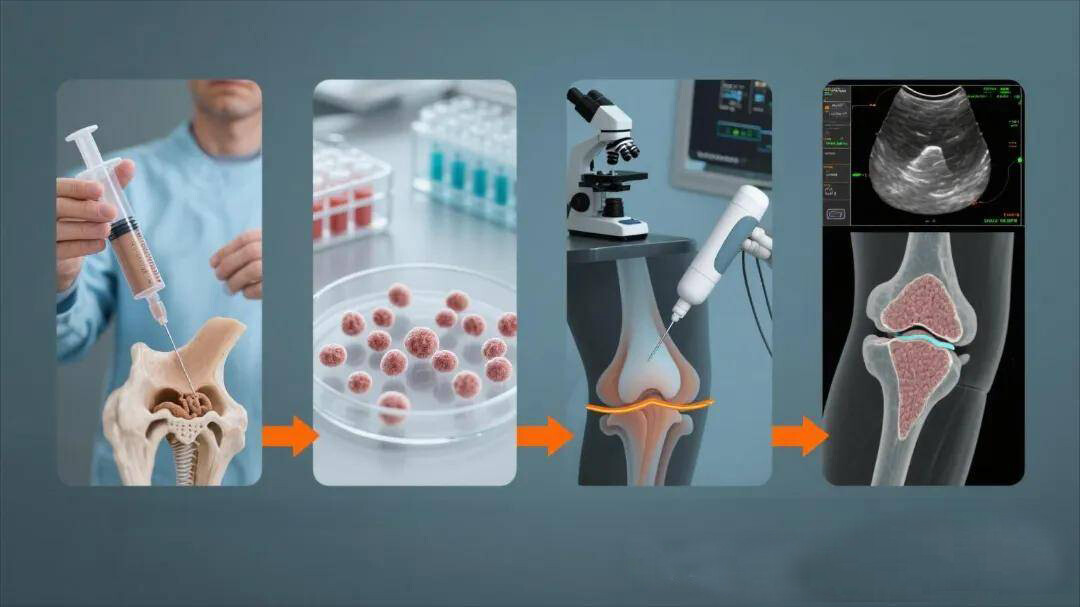
In a first-in-human clinical trial, researchers administered clinical-grade UC-MSC-sEVs intra-articularly to patients with knee osteoarthritis. Results showed that at baseline and 1 years post-treatment, patients exhibited reduced WOMAC scores, indicating symptom improvement, with no adverse events observed.
Third-party MRI assessments using SPAIR and WATSc sequences revealed no signs of cartilage degeneration, demonstrating the preliminary safety of initial intra-articular sEV administration in humans.
A subsequent Phase 1 clinical trial is planned to administer sEV therapy at low, medium, and high doses (2±0.5E+9 particles/3 mL, 6±0.5E+9 particles/3 mL, 20±0.5E+9 particles/3 mL) with a follow-up period of 1 years.
These results were validated in 1/2 phase randomized controlled trials and a 1-phase dose-escalation trial.